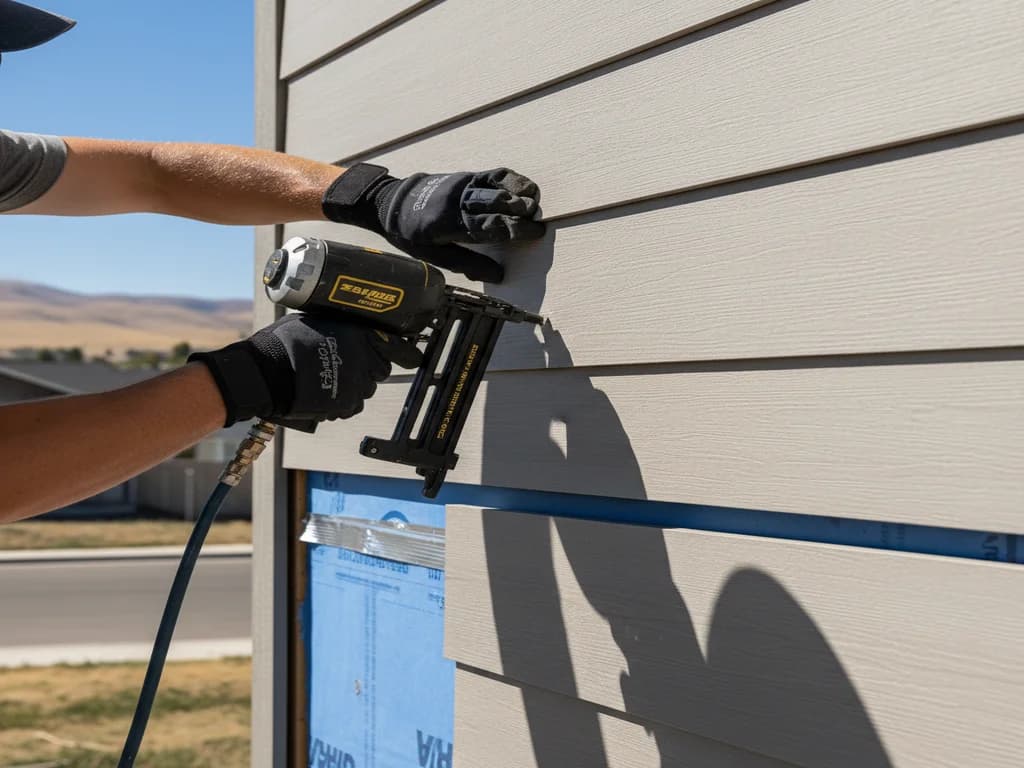
Treasure Valley Exteriors
Siding Installation & Replacement in the Treasure Valley
Durable, great-looking siding built for Treasure Valley weather
Siding is the largest single surface on your home's exterior and the hardest-working part of the building envelope. It carries the look of the house, but more importantly it sheds rain and snowmelt, blocks wind-driven moisture, and protects the sheathing and framing behind it. Iron Crest Exteriors installs and replaces siding across the Treasure Valley — fiber cement, engineered wood, and vinyl — along with the trim, fascia, soffit, and weather-resistive barrier that make the whole assembly work as a system rather than a set of parts.
A full re-side is more than peeling off old boards and stapling on new ones. It's an opportunity to correct what was hidden behind the old cladding: degraded house wrap, missing or reverse-lapped flashing at windows and penetrations, soft sheathing from years of trapped moisture, and gaps that let air and pests in. We open up the wall, inspect what we find, repair the substrate where it's needed, and install a continuous moisture barrier with properly integrated flashing before the new siding ever goes up.
Material choice drives both the look and the long-term performance. Fiber cement is dense, dimensionally stable, and stands up to UV, insects, and moisture with minimal fade; engineered wood gives the depth and grain of real wood at a lighter weight and better moisture tolerance than solid lumber; quality vinyl is the most budget-friendly and, installed with the right expansion allowance, performs reliably for years. We walk you through the trade-offs in durability, maintenance, and cost so the decision fits your home and how long you plan to be in it.
If your home is shedding paint, showing splits or warping at the butt joints, growing soft spots, or letting drafts through the walls, a free on-site estimate is the place to start. We'll tell you honestly whether you're looking at targeted repairs or a full re-side, and what a properly detailed installation involves.
Siding Types We Install
Every siding material and service we install across the Treasure Valley — each with distinct advantages for Idaho's climate. Explore the options below.
Materials
Fiber Cement Siding
Durable, fire- and rot-resistant fiber cement siding built for Idaho's freeze-thaw swings.
Learn more →Engineered Wood Siding
Engineered wood siding combining a real-wood appearance with better moisture and impact resistance.
Learn more →Vinyl Siding
Low-maintenance, budget-friendly vinyl siding in a wide range of colors and profiles.
Learn more →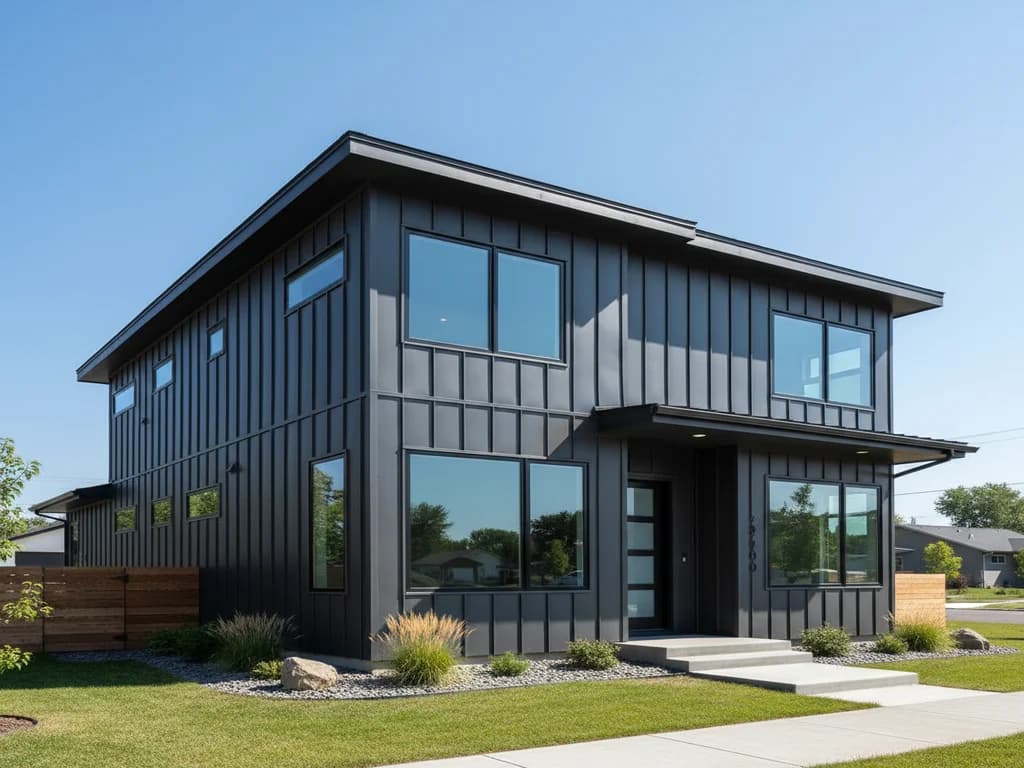
Steel & Metal Siding
Tough steel and metal siding for a modern look with serious weather and impact resistance.
Learn more →Brands We Install
Repair & Specialty
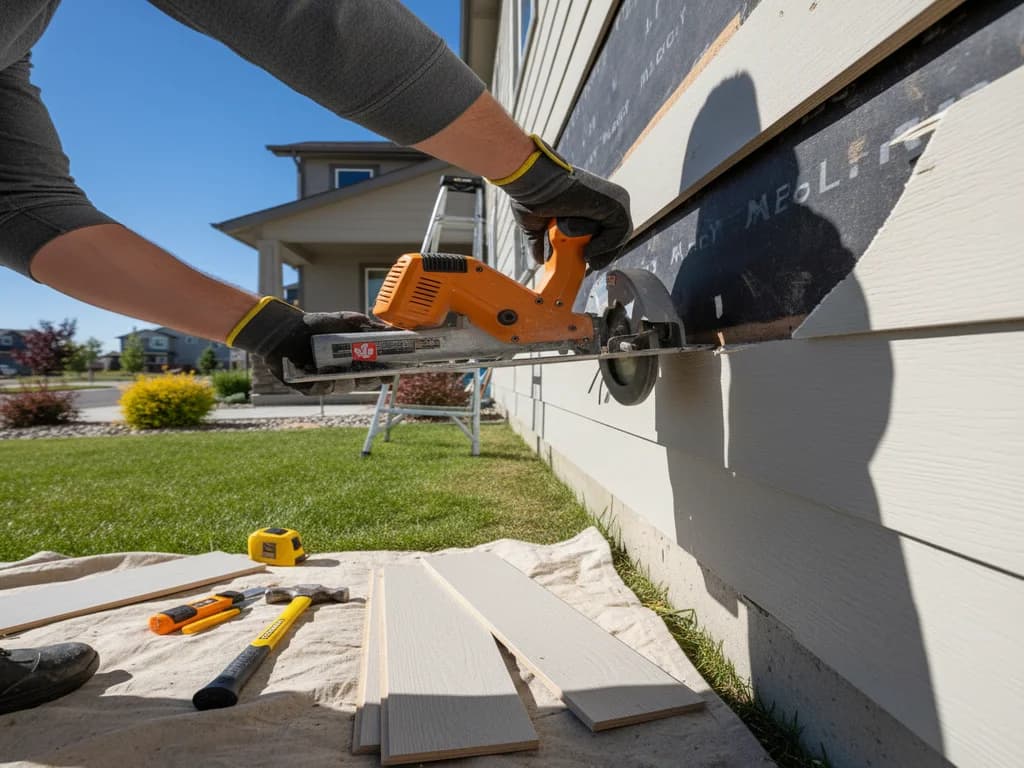
Siding Repair
Targeted siding repair — cracked boards, storm damage, and failed sections fixed and color-matched.
Learn more →Dry Rot & Water Damage Repair
Find and fix the rot behind failing siding — damaged sheathing, trim, and substrate restored.
Learn more →Siding Replacement & Re-Side
Full tear-off and re-side — swap tired or failing siding for a tight, modern, weather-ready exterior.
Learn more →Storm & Hail Damage Siding
Wind- and hail-damaged siding assessed, documented, and restored after Treasure Valley storms.
Learn more →Commercial & Multifamily
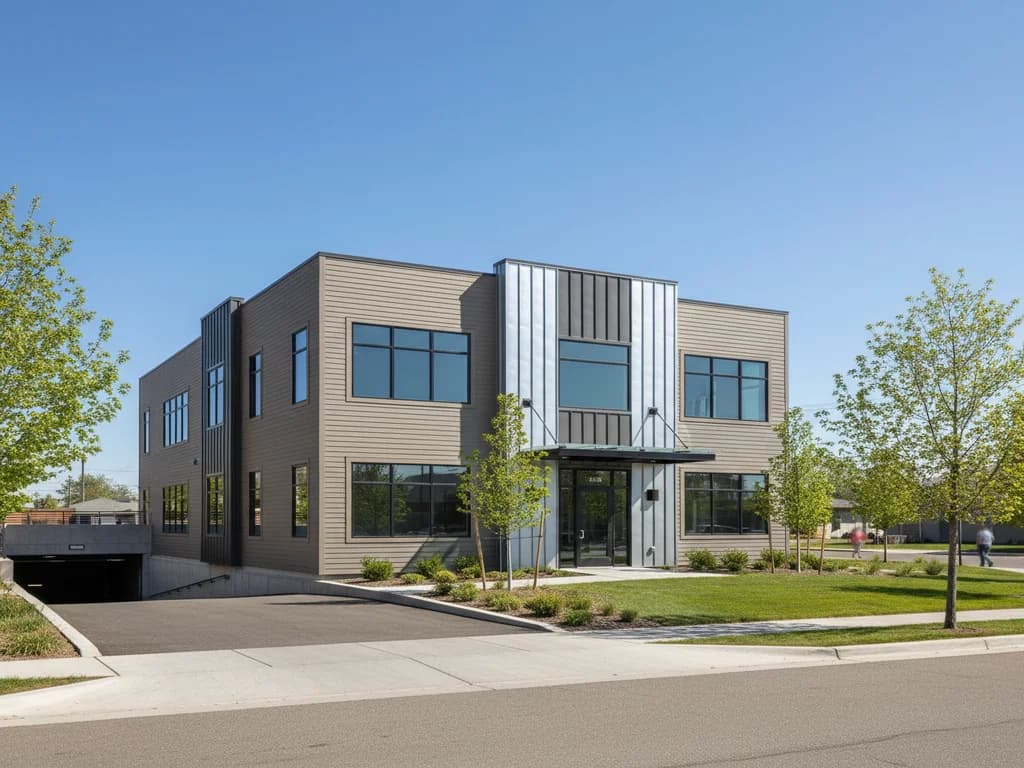
Commercial Siding
Siding and exterior cladding for offices, retail, and light-commercial buildings across the valley.
Learn more →Multifamily & HOA Siding
Siding for apartments, condos, townhomes, and HOA communities — consistent, code-right, on schedule.
Learn more →New Construction Siding
Siding for builders and GCs — accurate, on-schedule installation on new Treasure Valley homes.
Learn more →
Our process
How we handle siding installation & replacement
- 01
Free on-site consultation and assessment
We walk the home, look at the existing siding and trim, probe for soft sheathing and moisture intrusion, and check how the current flashing and house wrap were detailed. You get a written estimate scoped to what the home actually needs — no charge, no pressure.
- 02
Material and color selection
We lay out fiber cement, engineered wood, and vinyl side by side with honest pros and cons for your home's architecture, exposure, and budget, then help you settle on profile, texture, and color so you can picture the finished result before anything is ordered.
- 03
Tear-off and substrate inspection
The old siding and trim come off down to the sheathing. We inspect the framing and sheathing, repair or replace any rot or water damage we find, and document anything that affects the scope before we cover it back up.
- 04
Weather barrier and flashing
A continuous weather-resistive barrier (house wrap) is installed and properly lapped, then flashing is integrated at windows, doors, penetrations, and transitions so water is directed back to the surface instead of into the wall.
- 05
Siding installation to manufacturer spec
Siding goes on to the manufacturer's published specifications — correct fastener type and placement, proper overlap and clearances, and the right expansion gaps for the material — which is also what keeps the product warranty intact.
- 06
Trim, detailing, cleanup, and walkthrough
Fascia, soffit, corners, and trim are finished to match, joints are sealed where the system calls for it, and the site is cleaned with a magnetic sweep for stray fasteners. We walk the finished job with you before we call it done.
In the Treasure Valley
Built for local homes & weather
Treasure Valley weather is harder on siding than its reputation for dry sunshine suggests. Hot, high-elevation summer sun fades and embrittles cheaper materials and caulk, while winter freeze-thaw cycles work moisture into any crack or open joint and pry it wider. Wind events drive rain horizontally against walls, finding weaknesses that a vertical drip never would. The valley's generally dry air can also mask trouble — moisture gets behind siding and rots sheathing quietly, because there's no constant humidity to make the staining obvious — which is exactly why we open the wall and inspect the substrate on every re-side rather than assuming it's sound.
Many newer subdivisions across Meridian, Eagle, Star, and Kuna sit under HOA architectural review, which can restrict siding material, profile, and color — and sometimes requires approval before work begins. Older Boise neighborhoods like the North End carry their own character expectations. We're glad to help you put together what an architectural committee needs and to choose products that satisfy both the rules and the look you want.
Most Treasure Valley jurisdictions require a permit for a full re-side, and re-cladding can trigger current energy-code details around weather barriers and insulation depending on scope. We coordinate the permit so the work is inspected and on the books, which also protects you at resale.
Siding Installation & Replacement FAQs
What siding material is best for Idaho homes?
There's no single best answer — it depends on your priorities. Fiber cement is the most durable option for our climate, resisting UV fade, moisture, and insects with low maintenance, but it's heavier and costs more to install. Engineered wood gives a warmer, natural grain at a lighter weight and better moisture tolerance than solid wood, with periodic repainting down the road. Quality vinyl is the most affordable and, installed with correct expansion allowance, holds up well. We'll match the recommendation to your home's exposure, your maintenance appetite, and how long you plan to stay.
Should I repair my siding or replace all of it?
Targeted repair makes sense when damage is confined to a few boards and the surrounding siding, flashing, and weather barrier are sound. Once you're seeing widespread cracking, fading, warping, or signs that moisture has gotten behind the cladding, a full re-side is usually the better long-term value because patching can't fix a failed barrier or flashing underneath. We'll tell you straight which situation you're in after we've actually looked at the wall.
What drives the cost of a siding project?
The biggest factors are the material you choose, the square footage and number of stories, how much trim, fascia, and soffit detail the home has, the condition of the sheathing once we open it up, and the amount of flashing and prep the job requires. Removing multiple existing layers or repairing water-damaged framing adds to it. We give a written, itemized estimate after the on-site assessment rather than a phone guess, and we flag substrate repairs as a possibility up front since they're only visible once the old siding is off.
Why is the moisture barrier and flashing such a big deal?
Siding is the first line of defense, but it's never perfectly watertight — wind-driven rain and capillary action get water behind it. The weather-resistive barrier and flashing are what actually catch that water and direct it back out, away from your sheathing and framing. Skipping or sloppily lapping them is the single most common cause of hidden rot behind otherwise good-looking siding, so we treat that layer as the core of the job, not an afterthought.
How long does a siding replacement take?
Most residential re-sides run a few days to a couple of weeks depending on the size of the home, the material, the weather, and what we find when the old siding comes off. Fiber cement takes longer to install than vinyl, and discovering sheathing repairs can extend the timeline. We give you a realistic window at the estimate and keep you updated if conditions behind the wall change the scope.
Do you handle the trim, fascia, and soffit too?
Yes. Trim, fascia, and soffit are part of the same weather and aesthetic system as the siding, so we finish them to match. Soffit ventilation in particular matters for attic moisture and heat, and we make sure it's right rather than buried behind new material.
How much maintenance will new siding need?
It varies by material. Fiber cement and vinyl are largely wash-and-inspect — periodic cleaning and an occasional check of caulk joints. Engineered wood and any painted product will need repainting on a cycle, which our sun and temperature swings can shorten compared to milder climates. We'll set realistic expectations for the product you choose so there are no surprises a few years in.
Is a permit required for a re-side?
In most Treasure Valley jurisdictions a full re-side requires a permit, and depending on scope it can involve energy-code details for the weather barrier. We coordinate the permit so the work is inspected and documented — which also protects you when you sell.
What drives the cost of a siding project in the Treasure Valley?
Price comes down to a handful of factors: total wall area, how many stories (two-story and steep-gable walls need staging or lift access), whether the old siding needs full tear-off, the condition of the wall sheathing once it's opened up, and the trim and detail work around windows, corners, and gables. Material grade matters too, since fiber cement, engineered wood, vinyl, and steel each sit at different price points. We give a free on-site estimate so the number is based on your actual house, not a square-foot guess.
How long does a typical re-side take from start to finish?
For an average single-family home, most re-sides run from a few days to a couple of weeks of on-site work, depending on size, tear-off, and how much rotten sheathing or trim we find behind the old siding. Weather plays a role here in the valley, since we don't hang or finish siding in heavy rain or hard freeze. We'll give you a realistic schedule window once we've seen the house and confirmed material lead times.
Do I need a permit to re-side my house in the Treasure Valley?
Most full re-side and siding-replacement jobs in Ada and Canyon County fall under the locally adopted International Residential Code and typically require a building permit; straight repairs of small areas often don't. Requirements vary by jurisdiction (Boise, Meridian, Nampa, Caldwell, and the county all run their own building departments), so it's worth confirming for your address. We pull the permits we're responsible for and build to the inspected code path.
What siding holds up best in Idaho's high-desert climate?
Our valley throws hot, high-UV summers and freeze-thaw winters at a wall, plus valley wind and the occasional summer hailstorm. Fiber cement, engineered wood, steel, and quality vinyl all handle that range when they're installed to spec with proper flashing and clearances; the bigger differences are color retention, dent resistance, and maintenance over the years. The right pick usually depends on your budget, your look, and how hands-off you want maintenance to be.
How do I know whether to repair my siding or replace it?
Localized damage, a few cracked or loose boards, or a small wind-blown section is usually a repair. Widespread cracking, swelling, soft or rotten boards, paint that won't hold, or moisture getting behind multiple walls points toward replacement. If more than a quarter or so of the wall is failing, replacement often costs less over time than chasing repairs; we'll tell you straight which way your house leans after we look.
Pairs well with
Exterior projects often combine a few of these — one crew handles the whole job.
Helpful guides
Research the trade-offs before you commit — plain, local guidance on siding installation & replacement.
Sources & references
How we back what we say
Our recommendations follow building code, manufacturer specifications, and federal efficiency standards — not sales scripts. These are the primary sources behind the guidance on this page.
- Siding Products & Installation ResourcesJames Hardie
Manufacturer product data and published installation specifications for fiber cement siding, including the HardieZone climate-based product system.
- LP SmartSide Engineered Wood SidingLP Building Solutions
Manufacturer product line and installation instructions for engineered wood siding and trim.
- Energy Saver: SidingU.S. Department of Energy
Background on the wall assembly behind siding — insulation, drainage planes, and moisture control.
- Renovation, Repair and Painting (RRP) RuleU.S. Environmental Protection Agency
Federal lead-safe work practices required when disturbing painted surfaces on homes built before 1978 — relevant to siding tear-offs and window/door replacement on older Treasure Valley homes.
- Idaho Contractor RegistrationIdaho Division of Building Safety
Idaho's contractor registration program (RCE numbers). You can verify any Idaho contractor's registration status here.
- International Residential Code (IRC)International Code Council
The model residential building code Idaho jurisdictions adopt — governs weather-resistive barriers, flashing, fastening, and egress that exterior work must meet.
- Energy Saver: WeatherizeU.S. Department of Energy
DOE guidance on air sealing and the building envelope — the principles behind proper flashing, weather barriers, and sealing.
Need siding installation & replacement done right?
Tell us about your siding, window, or door project — we'll come take a look and give you a straight, free estimate.