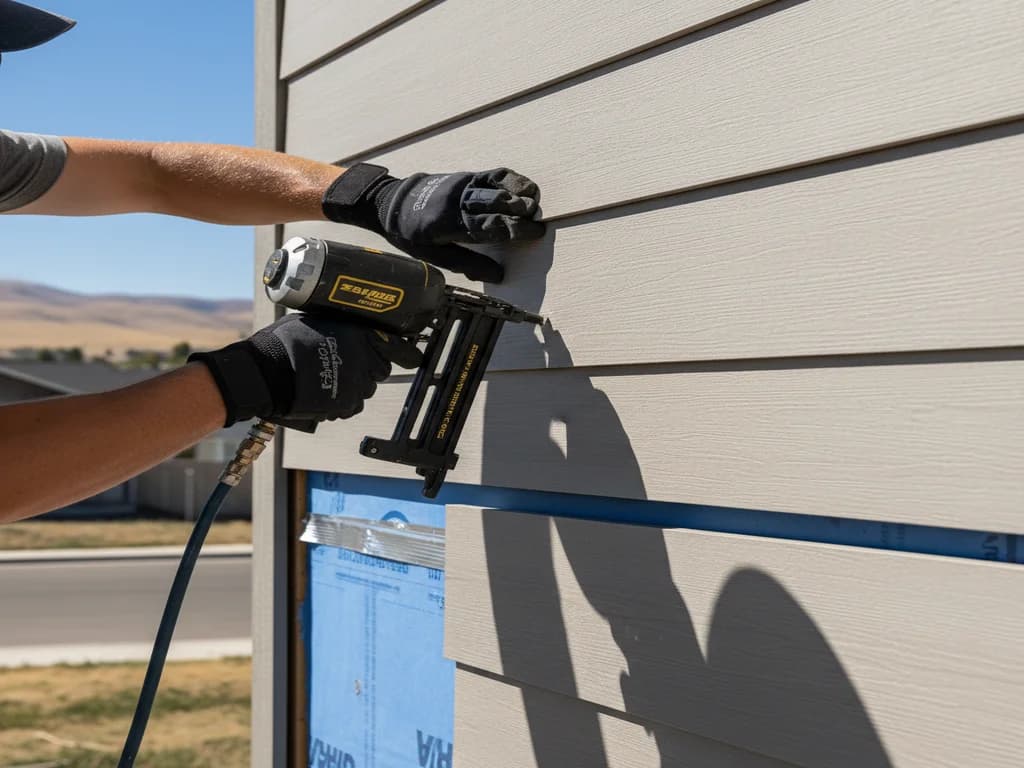
Treasure Valley Siding
Fiber Cement Siding in the Treasure Valley
Fiber cement siding that shrugs off Treasure Valley weather
Fiber cement is the workhorse of Treasure Valley siding — a dense board made of Portland cement, sand, and cellulose fiber that behaves nothing like the wood or hardboard it usually replaces. It won't rot, warp, swell, or feed insects, and because it's essentially mineral, it doesn't burn and doesn't break down under the high-elevation UV that bakes south- and west-facing walls all summer. For a home that has to ride out triple-digit July afternoons and subzero January nights in the same year, that stability is the whole point.
We install fiber cement in lap, panel, and shingle profiles, in widths and exposures that suit everything from a clean modern facade to a traditional Boise bench bungalow. You can take it pre-finished from the factory or have it primed and field-painted to a custom color, and we integrate the trim, corners, fascia, and soffit so the finished exterior reads as one intentional system rather than a sheet of boards.
Where fiber cement really earns its keep in our climate is dimensional stability. It barely moves with temperature, so the butt joints, caulk lines, and fastener heads that crack and telegraph on cheaper materials stay tight here. Paired with a properly lapped weather-resistive barrier and flashing at every opening, it gives you a wall that sheds water and holds its look for decades with little more than periodic cleaning.
It's the right call for owners who plan to stay in the home, want the lowest realistic long-term maintenance, and care about resale and fire resistance. It costs more than vinyl and is heavier to install, and we'll be straight about that trade-off rather than pretending it's free.
What's included
- Lap, panel & shingle profiles
- Pre-finished & field-painted options
- Moisture barrier & flashing
- Trim, fascia & soffit integration
- Full tear-off & re-side
Our process
How we handle fiber cement siding
- 01
On-site assessment
We measure the home, check the existing wall and substrate, and confirm the profile, exposure, finish, and scope before quoting a firm price — no phone guesses.
- 02
Material and finish selection
We lay out lap, panel, and shingle options and walk you through pre-finished versus field-painted so you can picture the result before anything is ordered.
- 03
Tear-off & substrate inspection
Old siding comes off down to the sheathing, and we inspect and repair any rot, soft framing, or water damage we find before new material goes up.
- 04
Weather barrier & flashing
A continuous weather-resistive barrier is installed and lapped correctly, with flashing integrated at windows, doors, and penetrations so water drains back out instead of into the wall.
- 05
Install to manufacturer spec
Fiber cement is fastened with the correct fasteners, clearances, and gauge spacing the manufacturer publishes — the same details that keep your product warranty intact.
- 06
Trim, seal, finish & walkthrough
Corners, trim, fascia, and soffit are finished to match, joints are sealed where the system calls for it, the site gets a magnetic nail sweep, and we walk the job with you.
In the Treasure Valley
Built for local homes & weather
Treasure Valley freeze-thaw cycles and the wide gap between summer highs and winter lows are exactly the conditions fiber cement is engineered for, which is why it's our most-requested re-side material from Boise to Caldwell. Its non-combustible makeup is also a genuine advantage where dry summers raise everyone's awareness of exterior fire exposure.
Many newer subdivisions around Meridian, Eagle, Star, and Kuna sit under HOA architectural review that can restrict siding profile, texture, and color and may require approval before work begins. Fiber cement's range of profiles usually makes it easy to satisfy a committee, and we're glad to help assemble what the architectural board needs.
Most valley jurisdictions require a permit for a full re-side, and re-cladding can trigger current energy-code details around the weather barrier depending on scope. We coordinate the permit so the work is inspected and documented, which also protects you at resale.
Fiber Cement Siding FAQs
Is fiber cement worth it over vinyl?
For most Treasure Valley homes where the owner plans to stay, yes — it's far more durable, non-combustible, rot- and insect-proof, and holds paint and resale value better than vinyl. The trade-off is higher material and labor cost and more weight. If budget over a large surface is the priority, vinyl can still be the smarter spend, and we'll lay out both honestly.
Can you match my existing siding?
In most cases we can match profile and exposure closely, whether you're re-siding the whole home or replacing a section. On faded older finishes an exact color match isn't always possible, and we'll tell you that up front rather than promise it.
Does fiber cement crack in our freeze-thaw winters?
Properly installed fiber cement is highly stable through freeze-thaw because it barely expands and contracts. Most cracking traces back to bad fastening, no expansion gap at butt joints, or trapped moisture behind the board — all things our install details are built to prevent.
Will it need repainting?
Pre-finished fiber cement carries long factory finish warranties and resists UV fade well; field-painted board will need repainting on the normal exterior cycle, which our intense sun can shorten compared to milder climates. Either way it's wash-and-inspect maintenance, not constant upkeep.
What drives the cost of a fiber cement re-side?
The biggest factors are square footage, number of stories and access, the profile and finish you choose, the amount of trim and detail the home has, and how much substrate repair the walls need once we open them up. We quote after seeing the home and flag possible substrate repairs up front since they're only visible with the old siding off.
How long does a re-side take?
Most single-family fiber cement re-sides run from several days to a couple of weeks depending on size, weather, and any repairs. Fiber cement installs slower than vinyl, and discovered sheathing repairs can extend the window — we give you a realistic estimate and keep you posted if the wall changes the scope.
What affects the cost of a fiber cement siding installation?
Fiber cement is heavier and harder to cut than wood or vinyl, so labor and proper handling are a real part of the price, along with wall area, number of stories, and tear-off of the old material. Pre-finished factory-color panels cost more up front than primed boards you paint on site, and trim detail, corner treatment, and any sheathing repair add to it. We price it from your actual walls during the free estimate.
How long does fiber cement siding last in our climate?
Fiber cement stands up well to the valley's UV, freeze-thaw, and dry heat because it doesn't rot, doesn't feed insects, and won't burn. Factory-finished boards typically go many years before they need repainting, while site-painted boards depend on the coating. The lifespan assumes correct gaps, flashing, and a paintable caulk schedule, which is where installation matters most.
Do fiber cement boards crack in Idaho's freeze-thaw winters?
Fiber cement is dimensionally stable and doesn't expand and contract much with temperature, so freeze-thaw alone doesn't crack properly installed boards. The cracking we see comes from moisture getting behind the board through bad flashing or missing clearance to the ground and roofline, then freezing. Holding the manufacturer's gaps and keeping boards off the dirt is what prevents it.
How does fiber cement compare to vinyl and engineered wood?
Fiber cement is more rigid and fire-resistant than vinyl and won't sag or melt, but it's heavier and costs more to install. Against engineered wood it's non-combustible and won't ever rot, though engineered wood is lighter, cuts faster, and is easier to handle on tall walls. The trade-off is usually weight and price versus maximum durability and a true painted-wood look.
What maintenance does fiber cement siding need?
It's low-maintenance, not no-maintenance: plan on an occasional wash, a periodic check of the caulk joints around windows and trim, and repainting eventually if the boards aren't factory-finished. Factory color finishes stretch the repaint interval considerably. Catching a failed caulk line or a chipped edge early keeps water out of the wall.
Other siding types we install
Explore the rest of our siding materials and services across the Treasure Valley.
Materials
Engineered Wood Siding
Engineered wood siding combining a real-wood appearance with better moisture and impact resistance.
Learn more →Vinyl Siding
Low-maintenance, budget-friendly vinyl siding in a wide range of colors and profiles.
Learn more →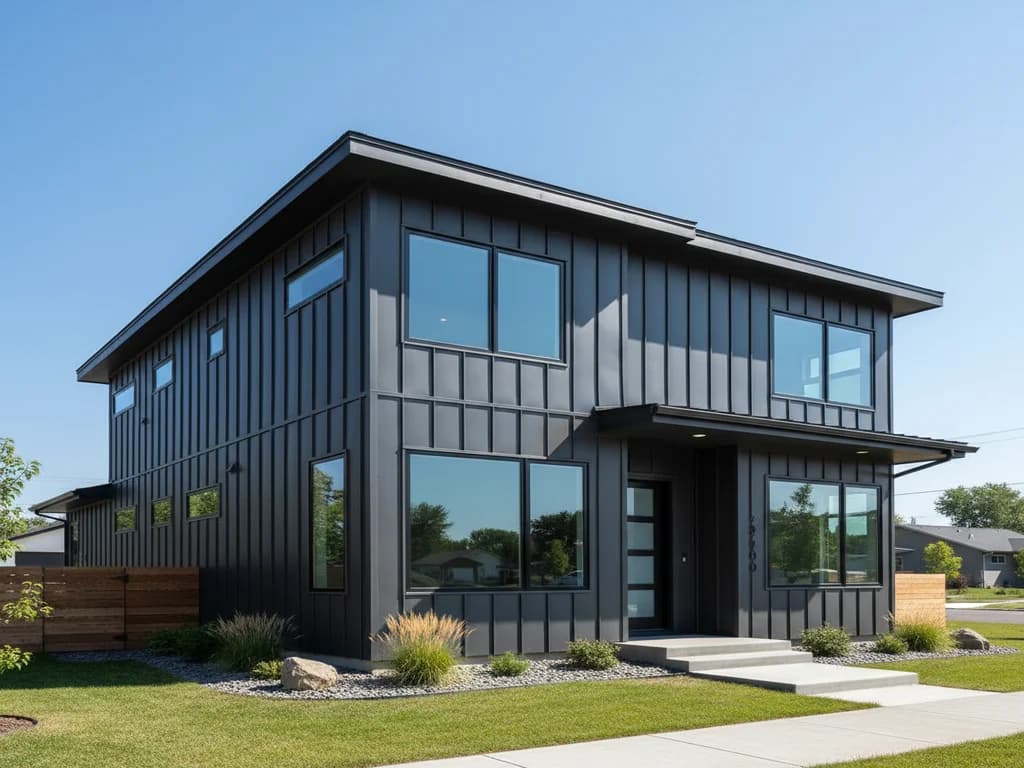
Steel & Metal Siding
Tough steel and metal siding for a modern look with serious weather and impact resistance.
Learn more →Brands We Install
Repair & Specialty
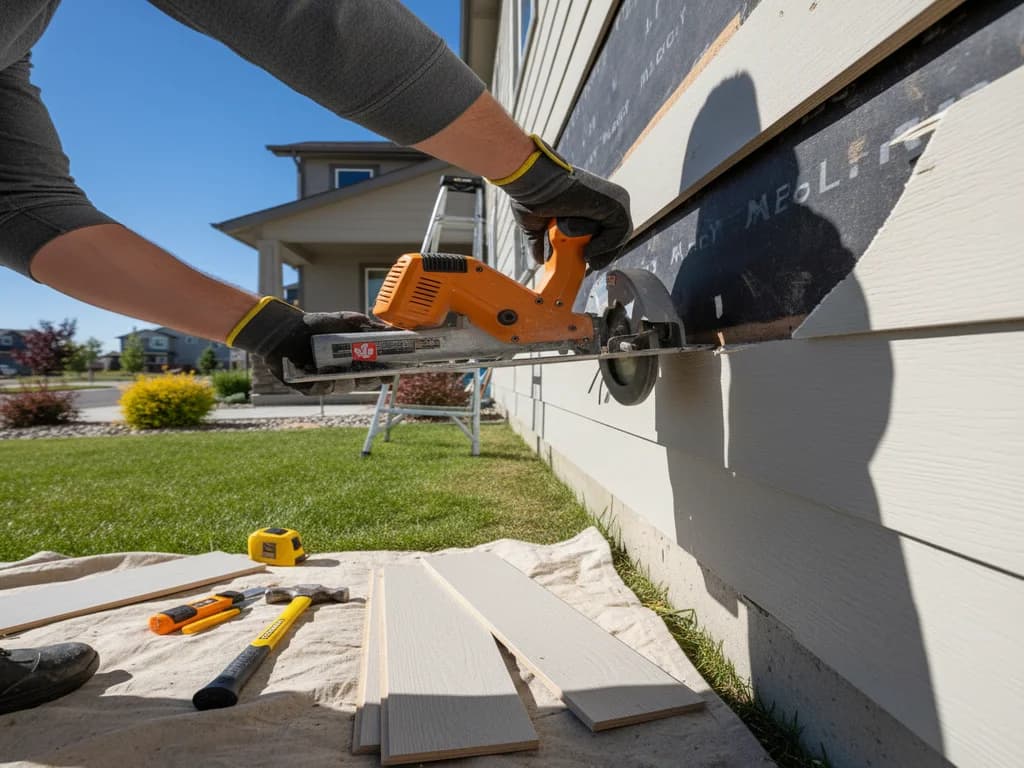
Siding Repair
Targeted siding repair — cracked boards, storm damage, and failed sections fixed and color-matched.
Learn more →Dry Rot & Water Damage Repair
Find and fix the rot behind failing siding — damaged sheathing, trim, and substrate restored.
Learn more →Siding Replacement & Re-Side
Full tear-off and re-side — swap tired or failing siding for a tight, modern, weather-ready exterior.
Learn more →Storm & Hail Damage Siding
Wind- and hail-damaged siding assessed, documented, and restored after Treasure Valley storms.
Learn more →Commercial & Multifamily
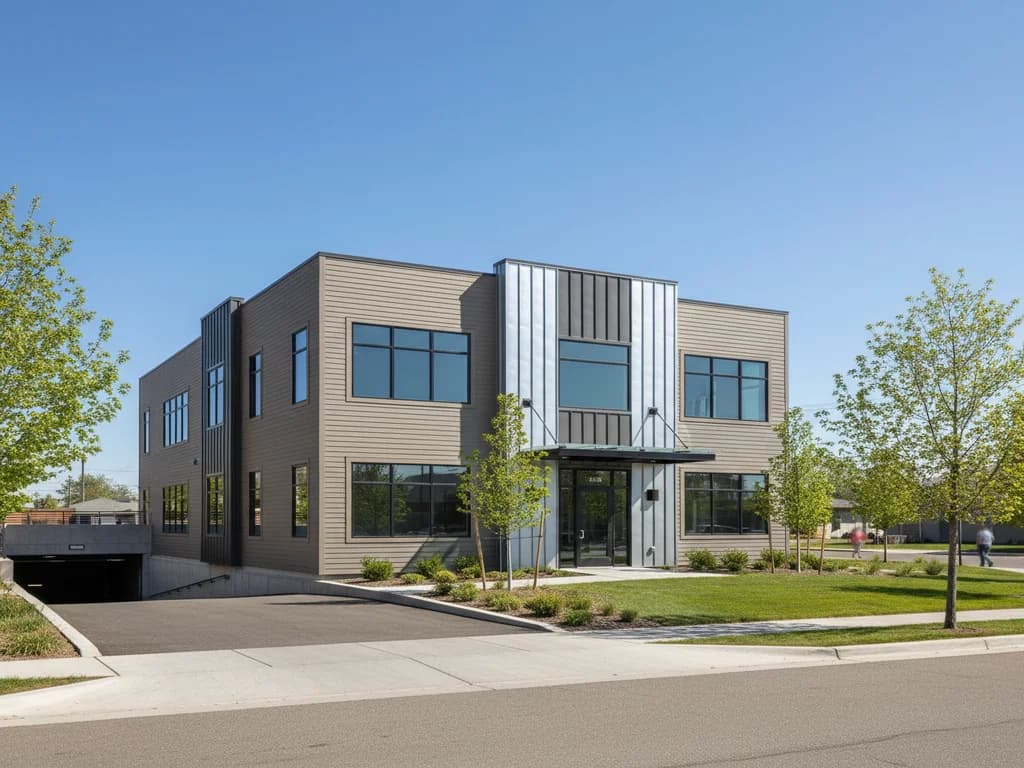
Commercial Siding
Siding and exterior cladding for offices, retail, and light-commercial buildings across the valley.
Learn more →Multifamily & HOA Siding
Siding for apartments, condos, townhomes, and HOA communities — consistent, code-right, on schedule.
Learn more →New Construction Siding
Siding for builders and GCs — accurate, on-schedule installation on new Treasure Valley homes.
Learn more →
Helpful guides
Plain, local guidance to research fiber cement siding before you commit.
Sources & references
How we back what we say
Our recommendations follow building code, manufacturer specifications, and federal efficiency standards — not sales scripts. These are the primary sources behind the guidance on this page.
- Siding Products & Installation ResourcesJames Hardie
Manufacturer product data and published installation specifications for fiber cement siding, including the HardieZone climate-based product system.
- LP SmartSide Engineered Wood SidingLP Building Solutions
Manufacturer product line and installation instructions for engineered wood siding and trim.
- Energy Saver: SidingU.S. Department of Energy
Background on the wall assembly behind siding — insulation, drainage planes, and moisture control.
- Renovation, Repair and Painting (RRP) RuleU.S. Environmental Protection Agency
Federal lead-safe work practices required when disturbing painted surfaces on homes built before 1978 — relevant to siding tear-offs and window/door replacement on older Treasure Valley homes.
- Idaho Contractor RegistrationIdaho Division of Building Safety
Idaho's contractor registration program (RCE numbers). You can verify any Idaho contractor's registration status here.
- International Residential Code (IRC)International Code Council
The model residential building code Idaho jurisdictions adopt — governs weather-resistive barriers, flashing, fastening, and egress that exterior work must meet.
- Energy Saver: WeatherizeU.S. Department of Energy
DOE guidance on air sealing and the building envelope — the principles behind proper flashing, weather barriers, and sealing.
Need fiber cement siding done right?
Tell us about your siding, window, or door project — we'll come take a look and give you a straight, free estimate.